One of the first worries for any retiree moving to the Philippines is simple: will I be able to get my regular medicines? The good news is that most common maintenance medications are widely available — you just need to know how the local system works.
Bring a Supply and Your Records
- Pack at least 2–3 months of each medicine in original labelled packaging.
- Carry a printed list of every medication with its generic (chemical) name and dosage.
- Bring a letter or recent records from your doctor back home.
Generic Names Are the Key
Brand names often differ from those in the US, UK or Australia. Pharmacists work from the generic name — for example amlodipine, metformin or atorvastatin — so always ask for medicines by their generic name. Locally made generics are often far cheaper than imported brands.
Getting a Local Prescription
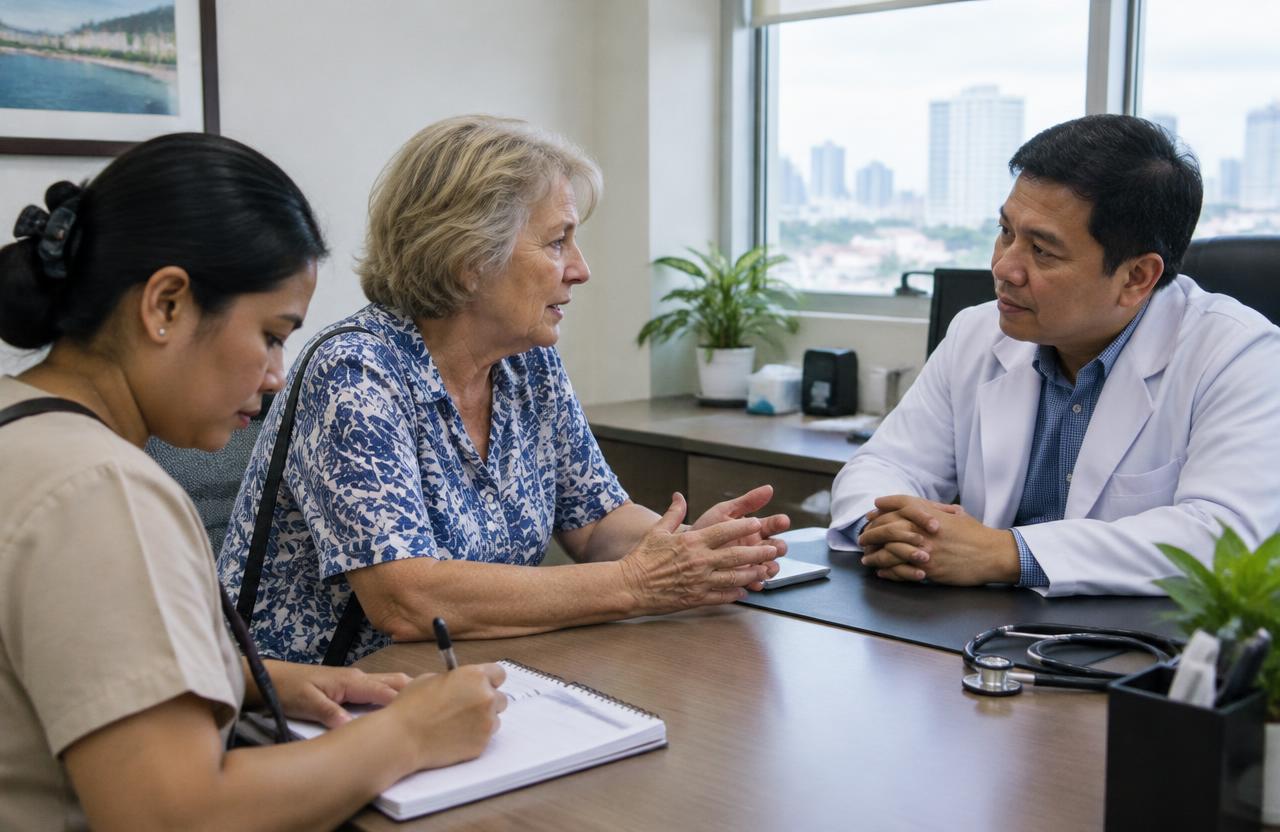
Many medicines require a prescription from a doctor licensed in the Philippines, and some regulated drugs need a special prescription form. A consultation with an English-speaking internist at a major Manila hospital is usually quick, and the doctor can review your existing list and write local prescriptions.
Refills Without the Traffic
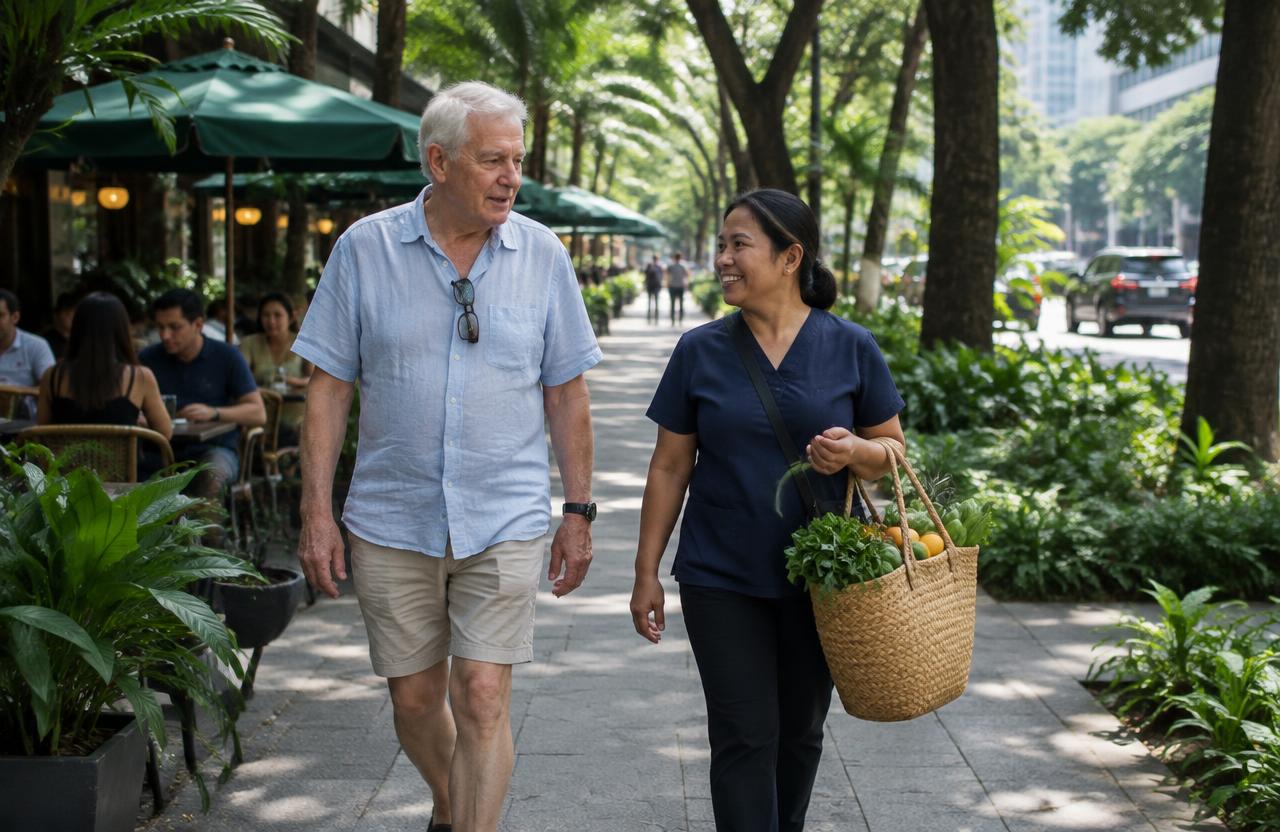
Large pharmacy chains and delivery apps can bring refills straight to your door, so there is no need to sit in Manila traffic every month. Setting up a regular refill routine prevents running out.
How an In-Home Caregiver Helps
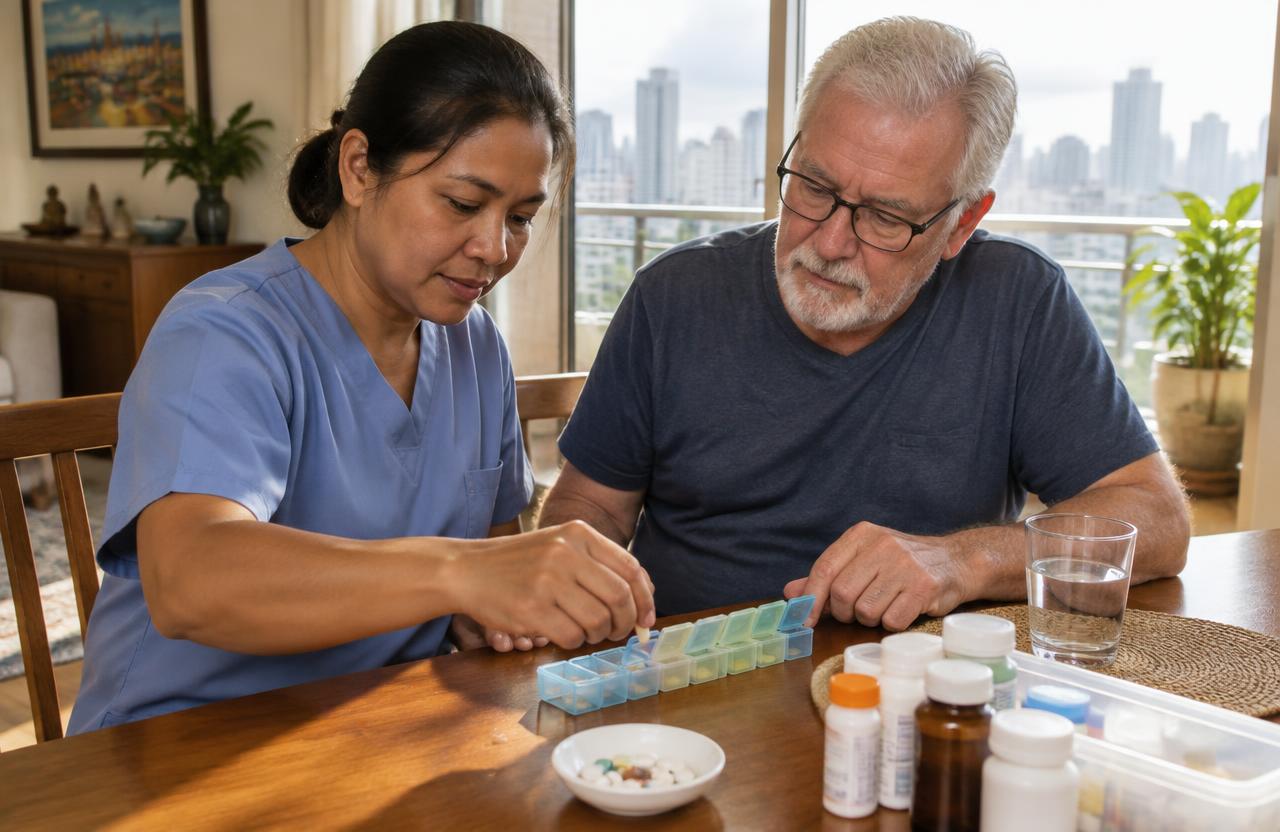
- Sorting medicines into a weekly pill organizer.
- Gentle reminders at the right times of day.
- Picking up or ordering refills before they run low.
- Keeping a simple log to share with your doctor or family abroad.
How ExpatCare Supports You
ExpatCare is an independent concierge and in-home care partner — not a care facility. We help you find the right doctor, arrange local prescriptions, organise deliveries, and provide caregivers who visit you in your own home to keep your medication routine on track.
Have questions?
Get in touch with our team to learn more about assisted living in the Philippines.